
The Price To Pay
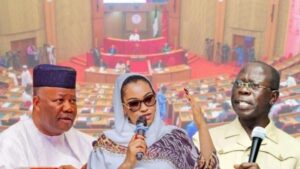
A debate occurred during the Senate sitting on October 21, 2025, involving Senate President Godswill Akpabio, Senator Natasha Akpoti-Uduaghan, one of just four women out of 109 senators who has finally returned to the Senate after a six months suspention by the Senate President, and Senator Adams Oshiomhole. The incidence happened when Senator Akpoti-Uduaghan sought to comment on the abortion clause in the Criminal Code Amendment Bill, 2025, after the issue had allegedly been referred to a committee.
The Bill originated from the House of Representatives and was sent to the Senate for concurrence, seekng to overhaul several provisions of the nation’s criminal code to address contemporary realities. It also seeks to introduce stringent penalties for sexual offenses, including life imprisonment for offenders found guilty of child rape, with no option of a fine.
Lawmakers however, have decided during the plenary to suspend further debate on sections relating to abortion and pregnancy termination, and the clauses were referred to the Senate Committee on Judiciary, Human Rights, and Legal Matters for a detailed review, with a report expected within two weeks. Senator Akpoti-Uduaghan attempted to comment on the abortion clause, as the issue directly affects women, but was met with Senator Adams Oshiomhole objection. He raised point of order, arguing that parliamentary rules forbid reopening discussion on a matter that has already been concluded.
Referencing Senate Rule 52(6). in his ruling, Senate President Godswill Akpabio upheld Oshiomhole’s objection, maintaining that since the Senate had already taken a position to step down the matter, it would be out of order to revisit it. The issue here calls for a deeper concern, as some have described this as part of the deeply gendered fault women face in politics and has ignighted mixed reactions already.
While some opinions believe Senator Natasha was seeking to express her viewpoint as a woman, others argue she was deliberately shut down due to the ongoing rift between her and the Senate President. Recall that this standoff began on March 6, 2025, when she was suspended for alleged misconduct, after protesting what she called an “unjust reassignment” of her Senate seat by President Godswill Akpabio.
The first tragedy of Senator Akpoti-Uduaghan’s case in the Senate is the fact that one of the few female senators in Nigeria was suspended in a violation of the Constitution by the Senate leadership, apparently in retaliation for her courage in speaking out against sexual harassment by the Senate President.
Instead of conducting an open and honest investigation on the issue that was reffered to the Senator Neda Imasuen Committee on Ethics, Privileges, Code of Conduct and Public Petitions as expected, they chose to silence her. Critics noted that the Senate’s actions, including ignoring court orders, were an abuse of legislative power and a potential threat to democracy itself. The incident showed how the legislative process can be used for political persecution to silence dissents.
Incidentally though, the suspension, while intended to punish, inadvertently boosted Senator Akpoti-Uduaghan’s public profile, garnering support and amplifying her voice and actions through media and social platforms. What an irony!
The second tragedy is that the Nigerian judiciary failed to intervene promptly and decisively, to put a stop to what it recognized as an unconstitutional action by the Senate. Sexual harassment is a grave offence and one that should ignite concern, especially given the ‘supposed’ pedigree of the Red Chamber. Senator Natasha’s case should have sparked reforms and policy reviews by now, regarding sexual harassment and the protection of individuals in Nigeria.
When a sitting senator reports sexual harassment, it signals the need for the nation to thoroughly investigate and ensure adequate protection for all exposed and vulnerable individuals. Unfortunately, this critical lesson remains unlearned and stands as the most troubling tragedy of this case.
Sexism in politics we know, restricts women’s effective participation and weakens democracy. A study by Hilde Coffé and colleagues on the 2024 legislative elections in Belgium reveals how sexist attacks, stereotypes, and dismissals are damaging the careers of women candidates, silencing their voices, and discouraging future leaders. Tackling these problems therefore, is very crucial for building truly representative politics and inclusive democracy.
Senator Natasha has returned to the Senate as we all anticipated, and there is no doubt that she has been vindicated by this whole drama scenerios.


